More + Poland
Collection 2 > Germany

Influence of 2 world wars
The German ceramics industry flourished around 1900, especially in regions such as Bavaria, Thuringia and Saxony. After World War II, Thuringia and Saxony were part of the German Democratic Republic (GDR). During that regime, the focus was on the production of functional and affordable ceramics, in line with the socialist ideal. Luxurious or decorative "bourgeois" products were considered undesirable and largely banned. As a result, many designs became standardized and the industry lost some of its creative freedom. From that time on, private ceramic factories were expropriated and transformed into Volkseigene Betriebe (VEB). After the fall of the Berlin Wall and German reunification in 1989-1990, a wave of privatisations followed. Some former owners got their factories back, while other VEBs were sold or closed. Machines and patents from bankrupt factories were often bought cheaply by "West German" or foreign competitors and disappeared from this part of reunified Germany. Yet part of the German ceramics industry managed to hold its own. Classic brands such as Meissen (former VEB Staatliche Porzellan-Manufaktur Meissen) survived and focused on high-quality ceramics, while smaller manufacturers introduced modern designs. Today, German ceramics tradition combines craftsmanship with innovation, but the industry is much smaller than in its heyday around 1900.
And now for the piggy banks: It may happen that certain piggy banks first existed without a brand (that was not unusual, piggy banks were and are a 'side issue') and later the same piggy bank with a VEB brand, which was mandatory in the GDR.

The “green series” from Thüringen
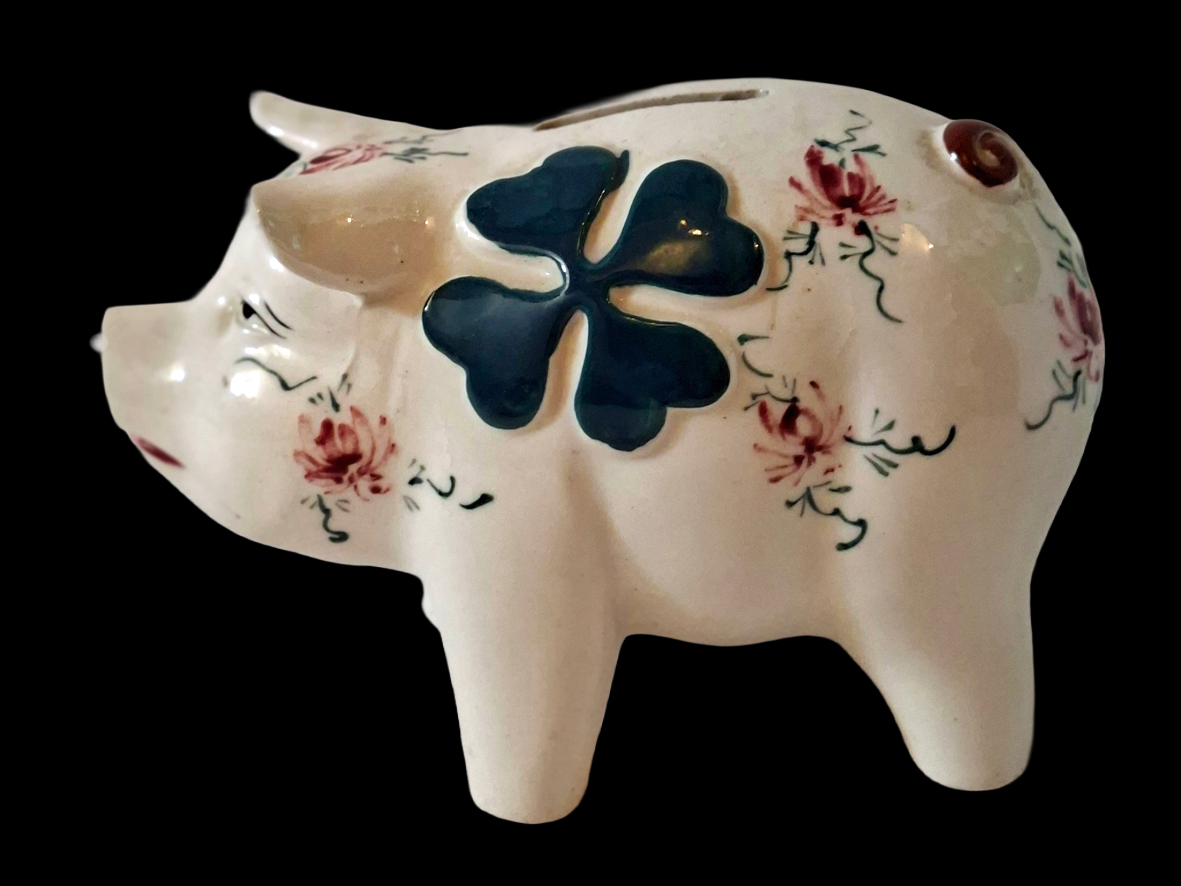
These piggy banks are from Thüringen and where produced in de 1920's. They were used as genuine piggy banks to collect coins in, but even more often to put them in a collection in the showcases of the middle and upper classes in those years. All of them are green glazed (not the pigs), that’s why this type of piggy banks is known as the ‘green series’. It is not quite sure who produced them, because of the lack of a hallmark. Experts have reason to believe that Conta und Böhme from Pößneck (Thüringen) made them.

5 small wallets with piggy's inside. From Thüringen, about 8-13 cm length/high.


Former GDR
This series comes from the former GDR and was widely sold in the Netherlands. That's why, when I first started collecting, I assumed they were Dutch, until I discovered a piggy bank from this series with an origin sticker. This shows you how important those stickers are, so NEVER remove them.
Specification of these piggy banks: Gray background, motifs from stripes to flowers, trumpet nose (example Gouda?), mostly flat ears. Dating: 1950-1980. They were most likely made by Philipp Griebel Gräfenroda, from 1972 it was part of VEB Gräfenroda Terrakotta GDR.
The VEB Gräfenroda-Terrakotta originated from Chr. Carstens Keramik GmbH, Gräfenroda. In 1947 the company was nationalized as VEB Terrakotta Gräfenroda and integrated into the GDR planned economy with continued production of utility ceramics. It was not until 1972 that Thoonwaarenfabrik Philipp Griebel Keramik (after the merger with Balzer & Bock) was added. VEB Gräfenroda-Terrakotta (all ceramic companies in Gräfenroda combined) mainly produced utility ceramics, decorative ceramics and arts and crafts products. This range most likely also included piggy banks, as both Carstens and Griebel in Gräfenroda traditionally made these.
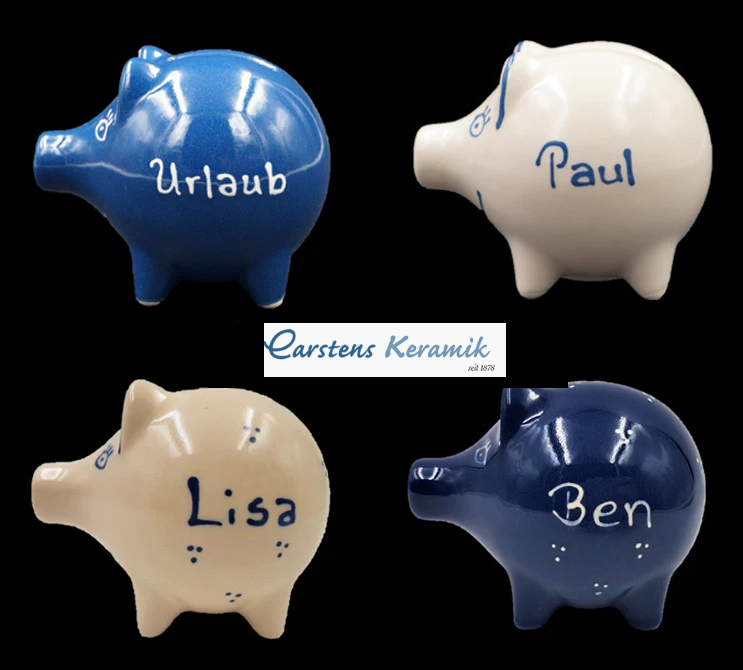
The "Terra" numbering (Terra 1 to 7) refers to different workshops or departments within the VEB system. The VEB Gräfenroda-Keramik had a Betriebsteil Terrakotta at Karl-Marx-Straße 67, indicating that terracotta production (which probably included piggy banks) was an important part of production. Carstens Keramik still produces handmade piggy banks today, with the name written by hand on the raw ceramic. These do not resemble the ones shown here, which makes it likely that they are indeed by Philipp Griebel. My piggy banks in this “gray” series have no stamps, some do have (remnants) of labels.
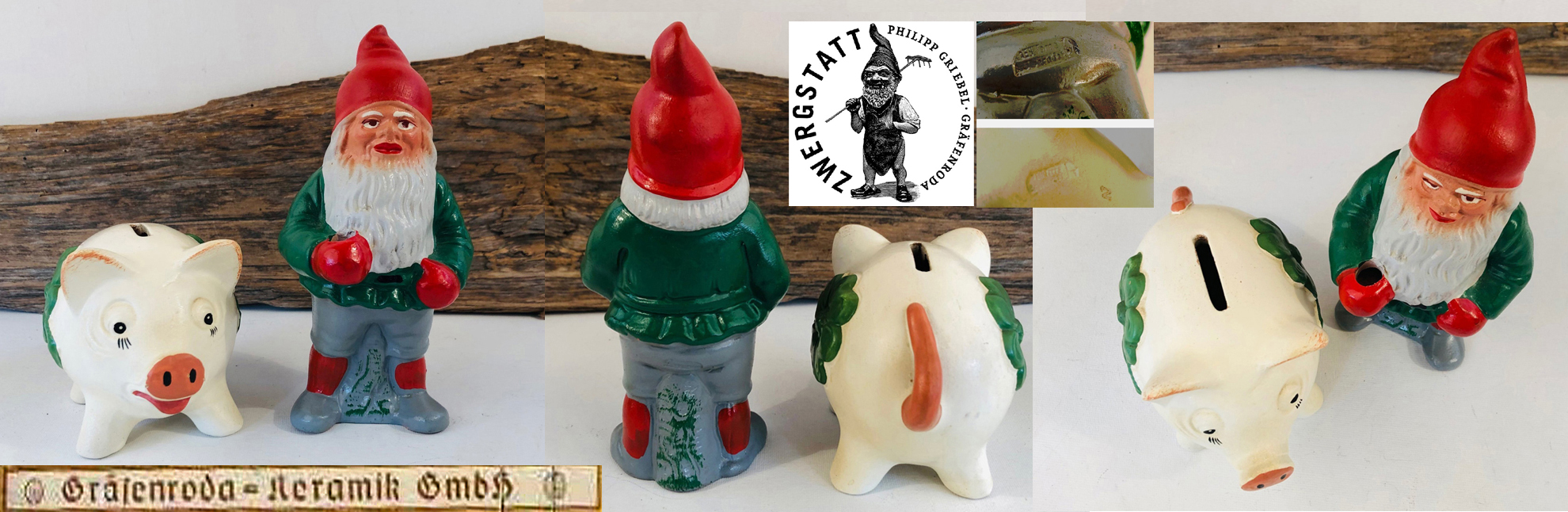
Philipp Griebel Gräfenroda was a major player when it comes to the production of garden gnomes. But not the only one in Gräfenroda, Balzer & Bock was one of them. A temporary ban on the production of garden gnomes, which were not needed under socialism, by the Ministry of Economic Affairs in Thuringia was (because the GDR desperately needed foreign exchange!) followed somewhat later by permission to resume production, but initially only for export to "bourgeois-capitalist foreign countries" and later - only to a very limited extent - also for the domestic market. In its home country, the GDR, the garden gnome (partly due to the ban) became a much sought-after rarity, traded under the counter and a valuable exchange item for holiday spots.





Even more GDR
The VEB Gräfenroda Terrakotta consisted of eight (8) original companies such as Carstens, Balzer & Bock and “Thoonwaarenfabrik Philipp Griebel” (from 1874) in Gräfenroda. The term "Thoon” means "clay" or "loam" and "waren" means "goods." Together it denotes clay products such as pottery, ceramics, pots, tiles, tableware, and other objects that are made of clay and fired in a kiln to harden them.
After the fall of the Berlin Wall and the disintegration of the VEB Gräfenroda Terrakotta, Carstens and Philipp Griebel became independent again. After 1990, Griebel produced ceramic garden gnomes and piggy banks, and sold them also online. The museum about the history of the garden gnomes from Gräfenroda is now also located on the company premises in Gräfenroda. Since January 2021, the traditional Griebel company and the museum have been continued by Helma Ortmann and Heidrun Viehweg under the company name “Zwergstatt Gräfenroda”.
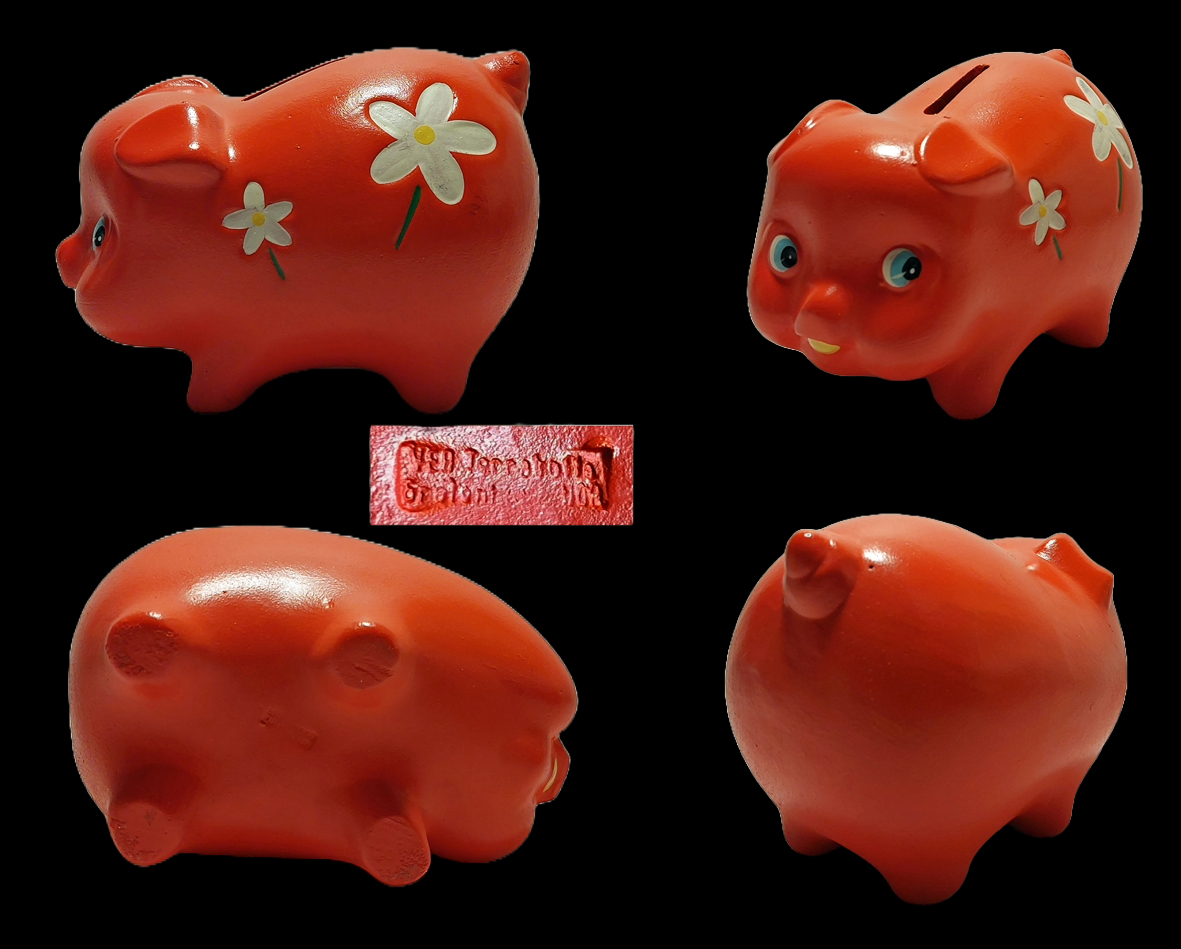
A little more about the stamps: If it says “VEB Terracotta Gräfenroda” underneath, that is clear to me. But under the same type of piggy banks it also says “VEB Terra 2 Gräfenroda” Or Terra 7, etc. I have not been able to find out what exactly that indicates. The VEB ovens? Could be. The various “Hutte” (workshops) also possible. There is no documentation left from the GDR period to find out.
It's not only Gräfenroda in Thüringen when it comes to piggy banks. There were more VEB's tat produced them as you can see in the photo's. And in the next level.




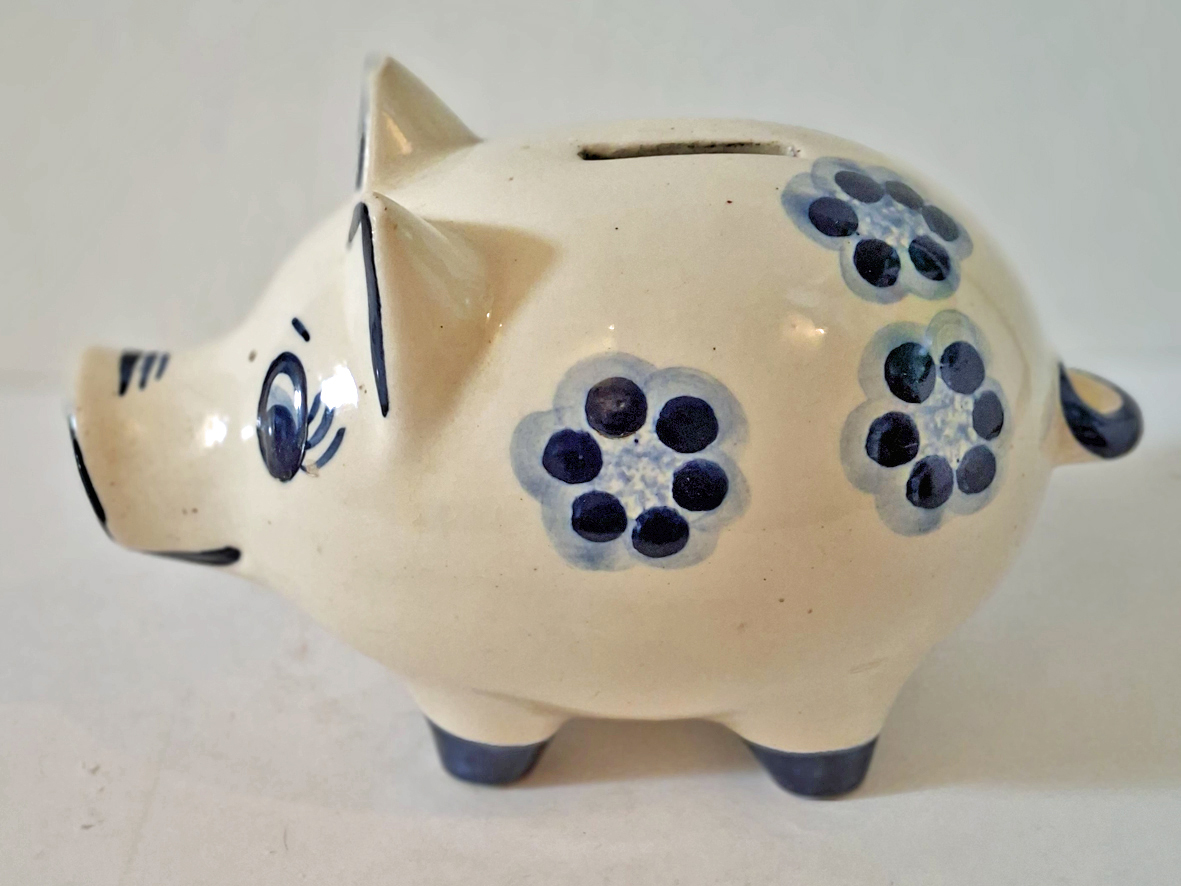
VEB Keramische Werke Haldensleben
- Origin: The roots lie in the stoneware factory founded in 1813 by Johann Gottlob Nathusius, later Uffrecht & Co. Nationalized in 1947 as VEB Keramische Werke Haldensleben.
- Haldensleben is a city in the German state of Saxony-Anhalt, about 20 km from Magdeburg.
- Production: From 1947 to 1976, decorative ceramics (including piggy banks), tableware and vases were produced at the location.
- Style: Known for the typical GDR ceramics from the 1950s to the 1970s, including the popular, highly structured “Fat Lava” glazes.
- Location: Production took place in the building of the current KulturFabrik Haldensleben.
- Collectible value: Ceramics VEB Haldensleben are nowadays a popular vintage piece.
- In 1990, Germany was reunified and the factory came back into the hands of the Carstens family via Treuhand. The name was changed to Carstens Keramik Rheinsberg.
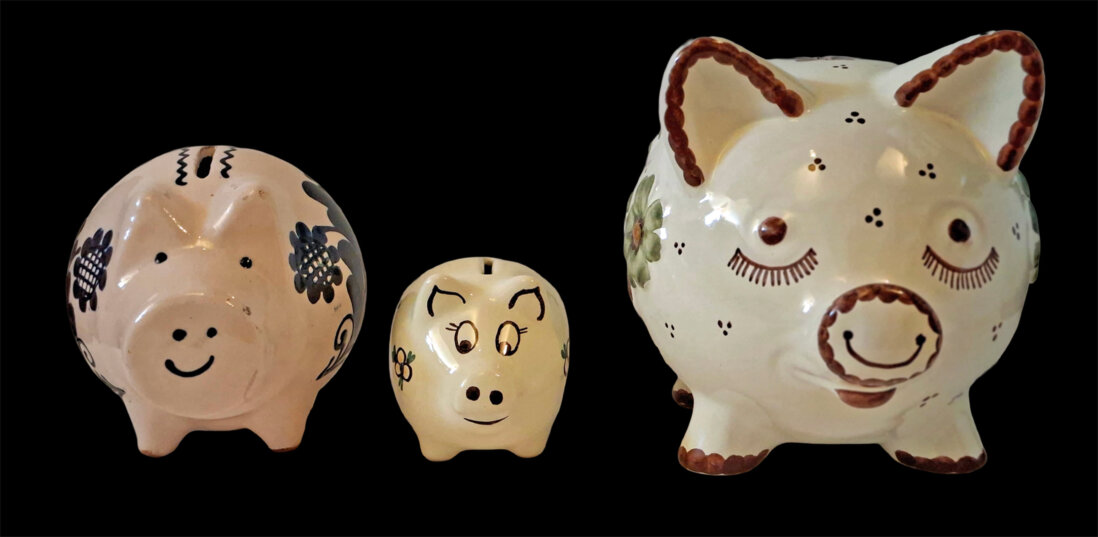
From left to right: 15, 11 and 26 cm length. The seller (eBay.de) worked at the VEB and obtained the piggy banks privately or if they were classified as B quality. Unfortunately, the stickers have disappeared and there is no logo under the piggy banks.

Import in the former GDR
In this section examples of exchange between former communist "utopia's": In the communist countries the marginal production capacity was a big problem. In a way entrepreneurs were creative to buy the missing products or parts from college communist “utopias”. Not aware of this I always thought that some of the here shown piggy banks that were bought in the GDR were also produced there. Until I decided to ask a native speaker in my home town to translate the label on two of these piggy banks. And found out they were originated in Troyan, Bulgaria.


Johann Maresch and Bünzlau
Johann Maresch's piggy bank comes from the 'Siderolith - Majolica - Terracotta - Fabrik'. Located in Aussig an der Elbe in the then Kaisertum Österreich, Königreich Böhmen. Nowadays Now Ústí nad Labem, Czech Republic. You will also see piggy banks from Bünzlau (at least) from before 1945.
The best-known companies from Bünzlau before 1945 are Reinhold & Co., Julius Paul & Sohn and Werner & Co. German Bunzlauer Keramik was produced until 1945. This tradition was later continued in Germany in the pottery village of Fredersloh in Moringen. After the Second World War, Bunzlau (Boleslawiec) was within the Polish borders. Based on the assets of the pre-war factories, Polish companies began to operate, continuing the Bolesławiec tradition. That is why Poland as a label on my website is classified under Germany.
Hugo Reinhold's ceramics workshop was founded in 1897. In 1904 it was converted to industrial production. In 1910 the name was changed to Bünzlauer Keramische Werke Reinhold & Co. From 1937 the new owners were K. Klein and R. Günther and the company was renamed Klein & Co. Feinsteinzeugfabrik. So where I indicate Reinhold it could also be Klein & Co.


Poland: Boleslawiec (Bunzlau)
Most of the Polish pottery industry is located in Boleslawiec (former German Bünzlau). Two factories dominate the 40 other: State factory Zakłady Ceramiczne "Boleslawiec" and Ceramika Artystyczna a private company. They also make pig piggy banks, with plastic stoppers. Authentic piggy bank pigs (without cap) I have from 2 smaller pottery factories: WIZA, now called Ceramika Boleslawieka (WIZA) and DANA in 1975 founded by Janusz Jakubowski and stopped around 1992. The DANA brand still exists.
History
When discussing Polish ceramics, Bunzlau—or Bolesławiec—takes center stage. Bunzlau was German, whereas Bolesławiec—the same town, albeit destroyed and subsequently rebuilt—is Polish and serves as the hub of Polish ceramic production. The history of Bunzlau (present-day Bolesławiec, Poland) dates back to the 14th century. Thanks to rich local clay deposits and legendary sponge-stamping techniques, the town evolved from the 18th century onwards into a world-renowned center for artisanal ceramics. The transition from German Bunzlau to Polish Bolesławiec was a direct result of the profound geopolitical shifts following World War II. At that time, Poland's entire border effectively shifted hundreds of miles westward on the map. When Polish artisans settled in the partially destroyed town between 1945 and 1947, they found the old German clay factories and kilns still in place. Although the German potters had left, the new Polish population decided to revive the centuries-old tradition; they restored the factories and adopted the traditional sponge-stamping techniques. In this way, the German *Bunzlauer Porzellan* seamlessly transformed into the globally cherished Polish pottery we know today.